Minecraft Bedrock's New Version Numbering in 2026: How the New System Works
Minecraft Bedrock Edition switched away from the old 1.x version numbers this year. After more than a decade of formats like 1.21 or 1.20.80, Bedrock now uses a year-based system where every release starts with the last two digits of the current year. It's a bigger shift than it sounds, and it affects how players, server owners, and addon creators track compatibility going forward.

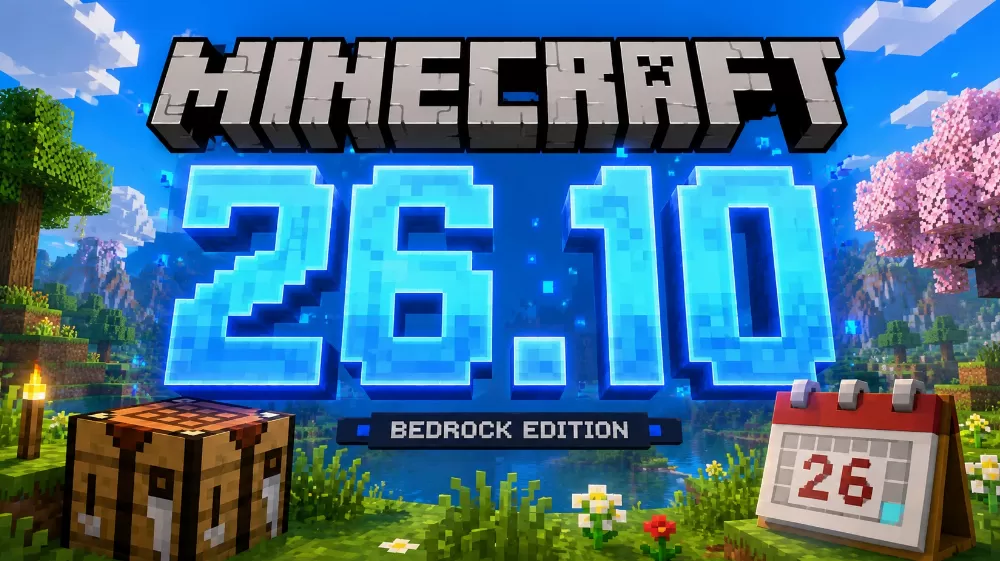
How Bedrock's New Format Works
The new version string follows the pattern YY.D.H, where YY is the year, D is the game drop number, and H is the patch or hotfix count within that drop. So the very first Bedrock release tied to a 2026 game drop reads as 26.10, the second drop's release becomes 26.20, and so on.
This ties directly into how Mojang now ships content. Instead of one huge annual update, Bedrock gets several smaller game drops throughout the year, each with its own theme and its own version block. Under the old system, something like 1.21.50 gave no real indication of when it shipped or how it related to other builds. The new format fixes that immediately: anyone looking at a version number can tell the year and which drop it belongs to without checking a changelog.
Beta and Preview Versions
Beta and Preview builds also picked up clearer version numbers. Instead of unpredictable internal build numbers, testers now see something like 26.30.25, which tells you it's a beta or preview build tied to the third drop of 2026. This makes it much easier for anyone testing experimental features, reporting bugs, or checking whether an addon still works, since the version number itself tells you where a build sits in the release timeline.
What This Means for Addon and Marketplace Creators
For anyone building addons, resource packs, or Marketplace content, the new numbering makes compatibility planning noticeably easier. You can look at a version number and immediately know which drop introduced it, rather than cross-referencing release dates. Nothing changes about how addons are built or how the game itself plays. This is purely a labeling change, and all older worlds and versions remain fully accessible.
Overall, the switch reflects how differently Mojang is shipping Bedrock content compared to a few years ago. With quarterly drops now the norm, a version format that reflects the year and the drop number just makes more sense than the old incremental approach.